

Key Takeaways
Balancing traditional SEO with AI-specific strategies is crucial for modern visibility.
Consistency in business information is vital for recognition by AI systems.
Content must be both valuable and contextually relevant to appeal to AI searches.
Key Answer
Google visibility focuses on SEO, keywords, and link building, while AI visibility leverages data, entity positioning, and content relevance for recommendations.
In today’s fast-paced digital landscape, understanding the dynamics of Google visibility vs AI visibility is crucial for small to medium enterprises (SMEs) in Australia. While traditional SEO remains a cornerstone for online presence, the rise of AI search engines introduces new dimensions. AI searches depend on strong entity positioning, valuable content, consistent business information, and external validations. This article will guide you through these differences and offer actionable strategies for visibility success.
Search Is Changing: From Search Engines to Answer Engines
Search engines are rapidly evolving into answer engines. This shift is marked by a change from merely presenting a list of websites to providing users with direct answers to their queries. For SMEs, this means visibility isn’t just about appearing on the first page anymore. You need to ensure that your business can provide the exact information potential customers are seeking.
AI-driven platforms like ChatGPT and Google AI are increasingly influencing how people search for information. Unlike traditional search engines, these AI systems understand context and deliver precise answers, reducing the need for users to sift through pages of search results. This evolution demands a fresh approach to digital marketing strategies, focusing on being the authoritative answer in your niche.
What Is Google Visibility?
Google visibility refers to how well your business appears in Google search results. It’s primarily driven by SEO practices like keyword optimisation, link building, and ensuring your website is both user-friendly and mobile-friendly. For Australian SMEs, appearing in Google’s top results can significantly boost business growth, as most consumers turn to Google first when looking for products or services.
To enhance your Google visibility, focus on creating high-quality content that aligns with search intent, acquiring credible backlinks, and utilising Google’s business tools like Google My Business. These elements contribute to an SEO strategy that aligns with Google’s ranking algorithms, ensuring your business stays prominent in search results.
What Is AI Visibility?
AI visibility focuses on how your business is recognised by AI-powered search tools. Unlike traditional search engines, AI systems like Siri or Alexa rely on data integration, semantic understanding, and context to deliver answers. For your business to be visible, it must be recognised as an entity within these systems, which involves maintaining accurate and consistent information across all digital platforms.
AI visibility also requires businesses to produce content that is not only informative but also contextually relevant. This means creating content that answers specific questions and provides value, thereby positioning your business as an authority in your field.
Google Visibility vs AI Visibility: The Key Differences
The core difference between Google visibility and AI visibility lies in how information is processed and presented. Google relies heavily on SEO, keywords, and backlinks to rank pages, while AI systems prioritise data accuracy, content context, and semantic links.
For Australian SMEs, this means adapting strategies to include both SEO practices and AI optimisations. While Google requires traditional content strategies, AI platforms need your business data to be comprehensive and consistent. Businesses must manage their online presence across multiple platforms to ensure they’re recognised as reliable entities by AI-driven systems.
Aspect | Google Visibility | AI Visibility |
|---|---|---|
Focus | SEO and Keywords | Data Integration and Context |
Ranking | Based on backlinks and keywords | Based on data accuracy and entity recognition |
Strategy | Content and link building | Entity positioning and contextual content |
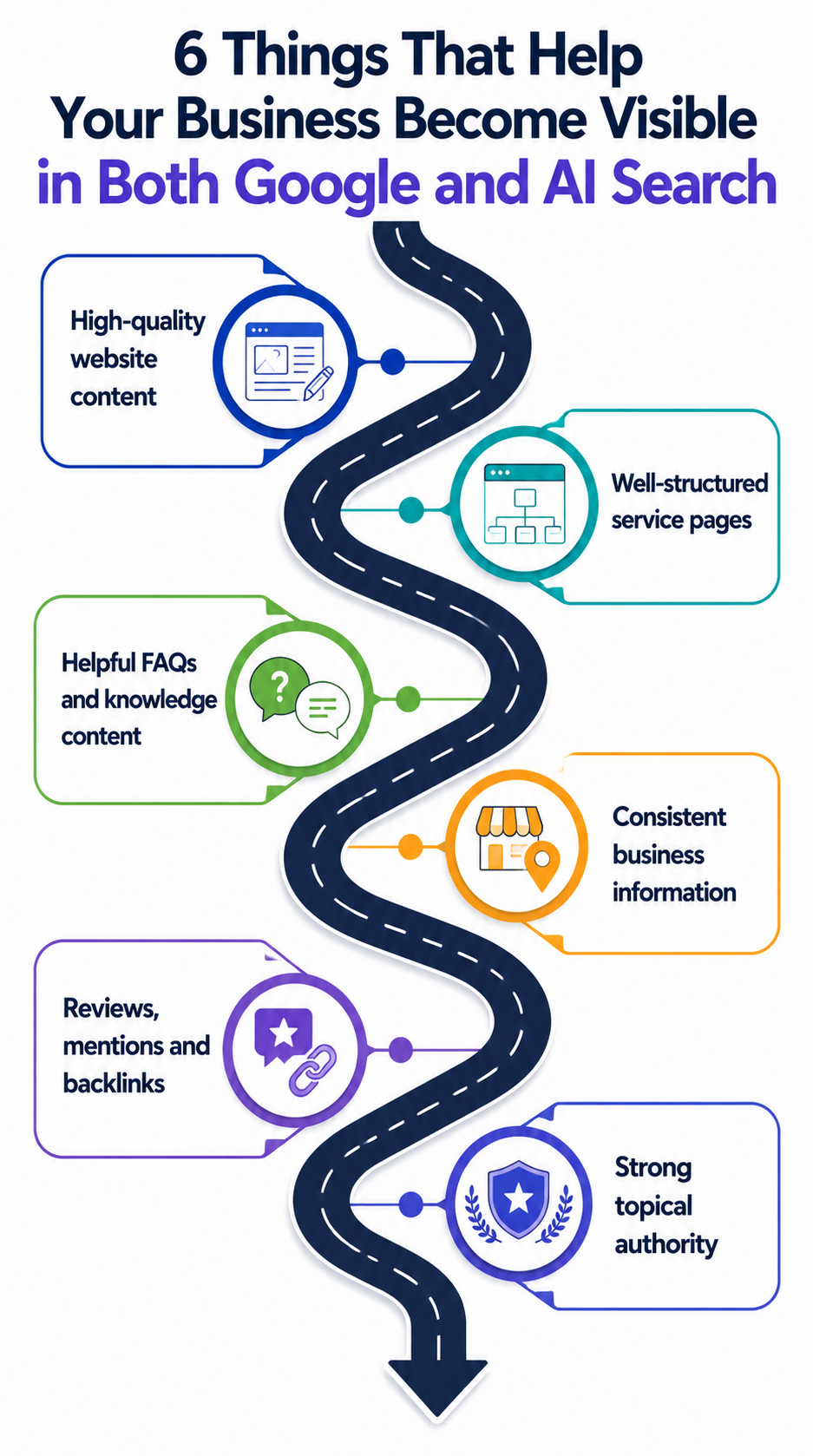
What Helps Your Business Rank in Both Google and AI Search
To rank in both Google and AI search engines, you must integrate traditional SEO with AI-focused strategies. Here are some practical steps:
Maintain Consistent Business Information: Ensure your business name, address, and phone number are uniform across all platforms. This consistency helps both AI and Google recognise your business as a legitimate entity.
Create Authoritative Content: Develop content that not only engages but also provides real value. This could include expert blogs, how-to guides, and informative videos that answer common customer queries.
Utilise Structured Data: Implement schema markup on your website to help search engines understand your content better, thus enhancing your visibility in both Google and AI searches.
Common Mistakes SMEs Make
Many SMEs fall into the trap of neglecting AI visibility by focusing solely on traditional SEO methods. This oversight can hinder their online presence as AI searches become more prevalent. Some common mistakes include:
Ignoring Data Consistency: Inconsistent information across platforms can confuse AI systems and affect your visibility.
Overlooking Content Relevance: Focusing on quantity over quality can dilute your authority. Ensure that all your content serves a purpose and adds value.
Neglecting External Signals: Failing to leverage reviews, social proof, and other external signals can limit your visibility in AI-driven searches.
How to Build a Visibility Strategy That Works for Both
To create a strategy that enhances both Google and AI visibility, start by combining traditional SEO tactics with AI-focused practices:
Regularly Audit Your Online Presence: Conduct audits to ensure your information is current and consistent across all platforms.
Invest in Content Marketing: Produce high-quality, contextually relevant content that addresses user intent and positions your business as an industry leader.
Leverage AI Tools: Use AI tools to gain insights into customer behaviours and preferences, tailoring your content and service offerings accordingly.
By implementing these steps, your business can enhance its visibility across multiple search platforms and stay ahead in the competitive digital landscape.
The Future of Business Visibility
The future of business visibility will increasingly depend on how well businesses can adapt to both search engine and AI-driven environments. As AI becomes more integrated into everyday search habits, businesses must focus on establishing their online presence through consistent data and valuable content.
For SMEs in Australia, embracing this dual approach will be essential for sustaining growth and competitiveness in the digital age. By staying informed about changes in search technology and adapting strategies accordingly, businesses can ensure they remain visible to both traditional and AI-driven audiences.
To see how these insights apply to your business, consider booking a demo with iBeVisible to explore tailored strategies for enhancing your digital presence.
Frequently Asked Questions
Google visibility relies on SEO techniques like keywords and backlinks, whereas AI visibility focuses on data accuracy and contextual content.
Improve AI visibility by maintaining consistent business information across platforms, creating relevant content, and leveraging external signals like reviews.
AI visibility is crucial as it ensures your business is recognised and recommended by AI-driven search tools, which are becoming more popular.
Structured data helps search engines understand your content better, enhancing visibility in both Google and AI searches.
SMEs should avoid ignoring data consistency, overlooking content relevance, and neglecting external signals, as these can impact visibility.