

Key Takeaways
Blog automation encompasses the entire content creation process, not just writing.
A blog automation platform integrates SEO planning, content drafting, and distribution.
For Australian SMEs, leveraging a blog automation platform like iBeVisible enhances brand visibility.
Key Answer
Blog automation is the process of using technology to streamline your content creation workflow, covering everything from research to distribution. For Australian businesses, this means enhanced efficiency and stronger online visibility, making it a crucial tool for growth.
In the digital age, staying ahead of the competition means mastering new tools and strategies. Among these, understanding “What Is Blog Automation and Why Does Your Business Need It?” can be a game-changer for small to medium enterprises (SMEs) in Australia. By adopting a blog automation platform, you can streamline your entire content workflow, from topic research and SEO planning to the final stages of publishing and distribution. This comprehensive approach not only enhances consistency and visibility but also aligns with the evolving SEO landscape to boost your business presence effectively.
Why Blogging Is More Important Than Ever
In the bustling world of digital marketing, blogs remain a cornerstone of content strategy. For Australian SMEs, blogging is more than just a way to communicate with your audience–it’s a powerful tool for building authority and driving traffic. As search engines continue to evolve, prioritising content that demonstrates expertise, authority, and trustworthiness becomes crucial. Blogs provide a platform to showcase industry insights and build a loyal community. In a market as vibrant as Australia, your blog can be the voice that sets you apart, fostering engagement and driving business growth.
What Is a Blog Automation Platform?
A blog automation platform is a comprehensive tool designed to manage the entire content creation and distribution process. Unlike basic AI writing tools, these platforms offer a suite of features that handle everything from topic ideation and SEO planning to drafting, editing, and distribution across multiple channels. Think of it as your all-in-one digital content manager that not only saves time but ensures your content is optimised for search engines, ensuring better visibility and reach. For Australian businesses, leveraging such a platform means staying competitive in a fast-paced digital landscape.
How Blog Automation Works
At its core, blog automation is about efficiency. The process begins with identifying key topics and conducting in-depth SEO planning to align with current search trends. Once topics are set, the platform facilitates drafting and refining content through AI-enhanced tools that assist in maintaining tone and style consistency. Post-writing, it automates the integration of images, optimised social media snippets, and even newsletter content. Finally, automated distribution ensures your content reaches the right audience at the right time, across various digital touchpoints.
Blog Automation vs AI Writing Tools
While AI writing tools offer basic assistance in generating content, they don’t provide the comprehensive workflow management that blog automation platforms do. Blog automation is about integrating various stages of content creation into one seamless process. It doesn’t just stop at writing; it encompasses the entire lifecycle of a blog post, from ideation to publishing and analytics. This is crucial for businesses looking to maintain a consistent brand voice and achieve measurable results.
Benefits of Using a Blog Automation Platform
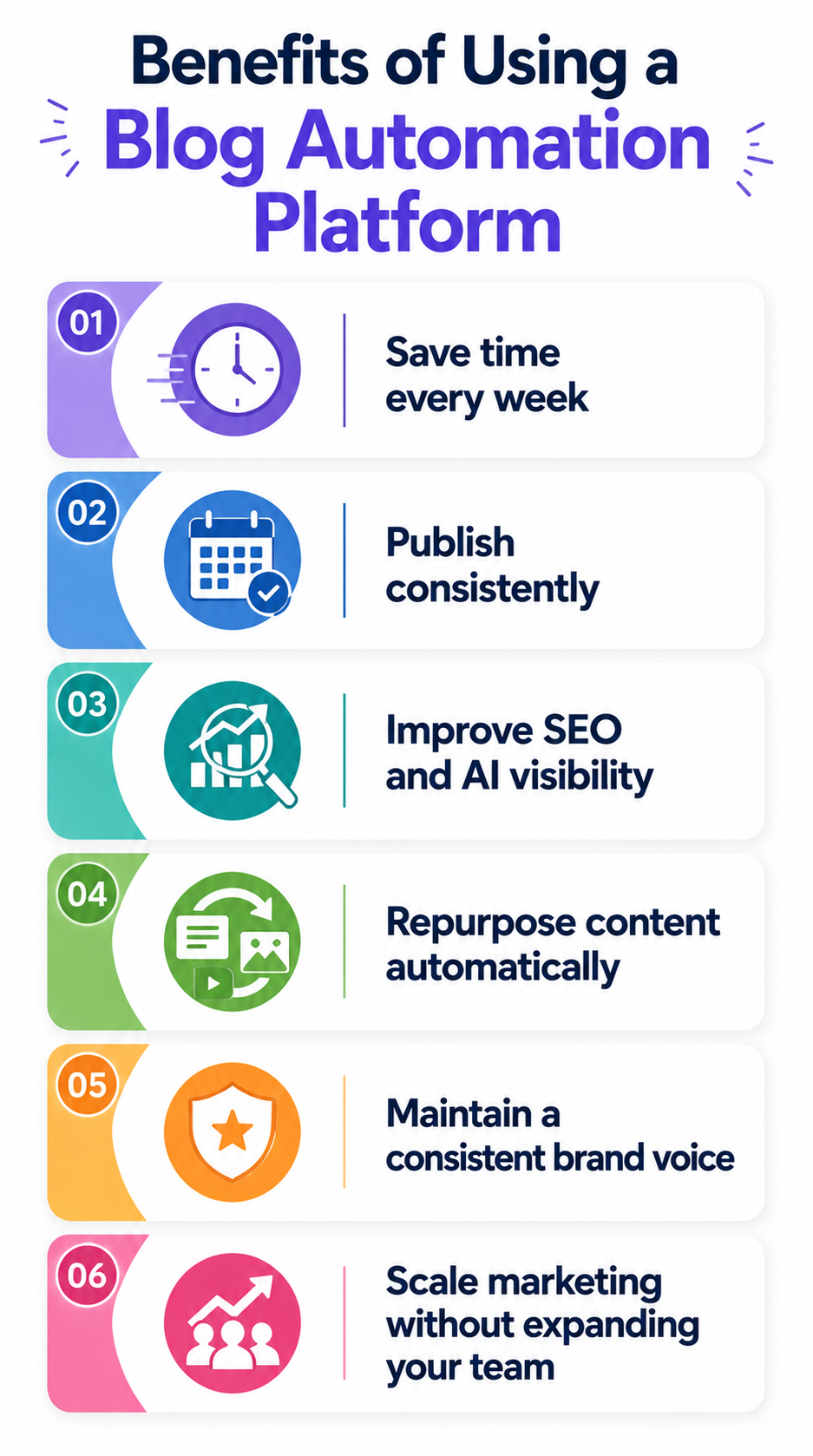
The benefits of adopting a blog automation platform are vast. Primarily, it streamlines your workflow, saving you time and resources that can be better spent on strategic growth. Automated processes ensure that every piece of content is thoroughly optimised for search engines, enhancing visibility and engagement. Moreover, it supports consistency across all content types, which is crucial for building a strong brand identity. For small Australian businesses, this can mean the difference between getting lost in the noise and standing out as a leader in your field.
Signs Your Business Needs Blog Automation
If you’re finding it hard to keep up with content demands, struggling with consistency, or seeing limited engagement, it might be time to consider blog automation. Other signs include spending excessive time on manual tasks or lacking a clear content strategy. By shifting to an automated system, you can focus on refining your brand’s voice and strategy, knowing the operational side is covered.
What to Look for in a Blog Automation Platform
Choosing the right blog automation platform is crucial. Look for features like comprehensive SEO tools, integration capabilities with your existing digital assets, and a user-friendly interface. It’s essential that the platform supports collaboration and allows for customisation to fit your brand’s specific needs. For Australian businesses, finding a platform that understands the local market’s nuances can also provide a competitive edge.
How Blog Automation Helps Small Businesses Grow
For SMEs, a blog automation platform like iBeVisible can be a vital growth tool. It allows you to maximise your marketing efforts by ensuring content is always fresh, relevant, and aligned with your audience’s interests. By automating mundane tasks, you can allocate more resources to strategic planning and creative development. This leads to better engagement, a stronger online presence, and ultimately, increased revenue. Join the iBeVisible early bird waitlist now.
Frequently Asked Questions
Blog automation integrates all stages of content creation and distribution, ensuring efficiency and consistency, unlike manual blogging which requires handling each step individually.
It saves time, ensures SEO optimisation, supports consistent branding, and improves content reach and engagement.
Yes, but it particularly benefits small to medium enterprises by streamlining content management and enhancing online visibility.
No, it complements human creativity by handling repetitive tasks, allowing more focus on creative aspects and strategy.
Look for SEO capabilities, integration options, ease of use, and customisation features that align with your business needs.