
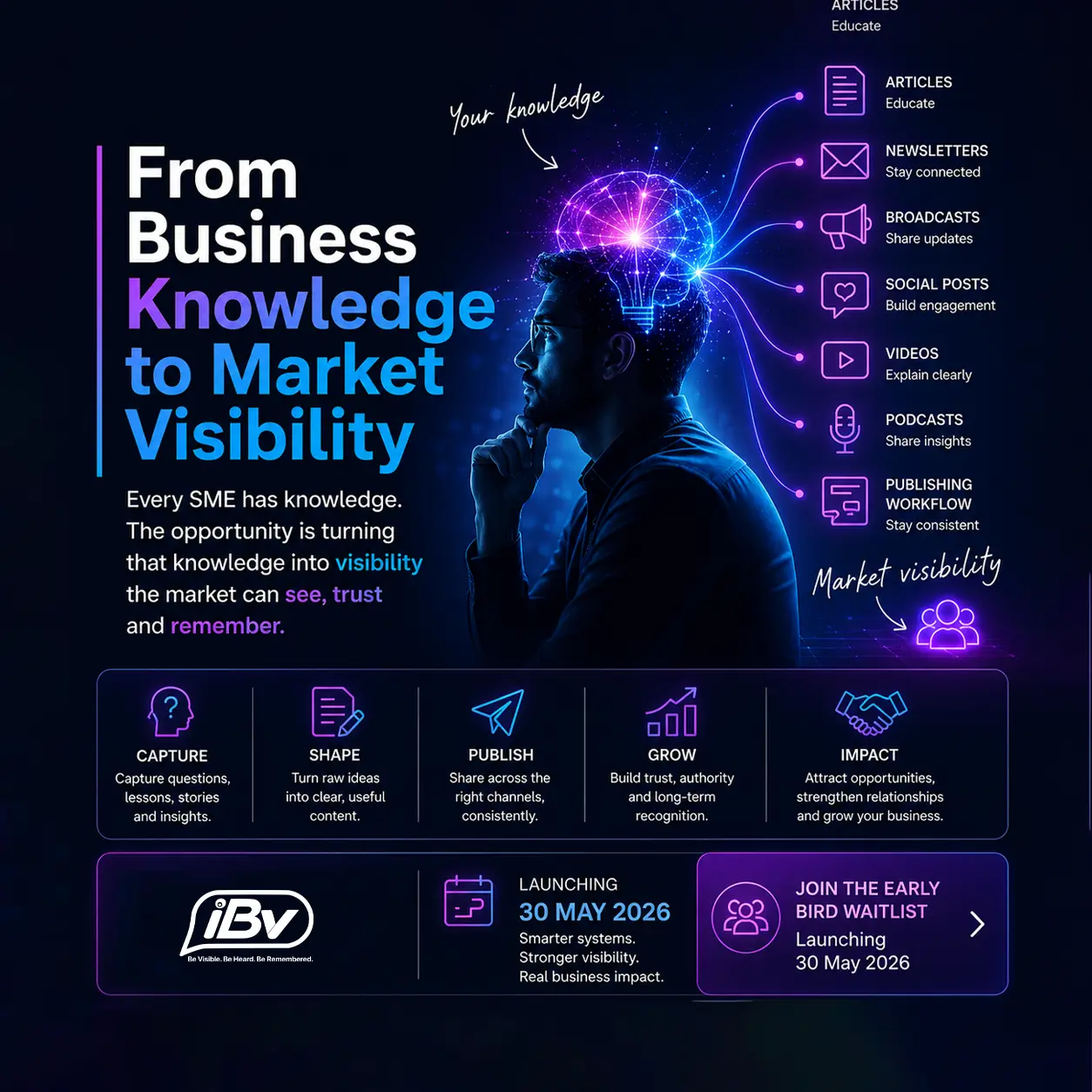
Every SME has knowledge sitting inside the business.
It may not always be documented. It may not always be polished. It may not always look like marketing. But it is there.
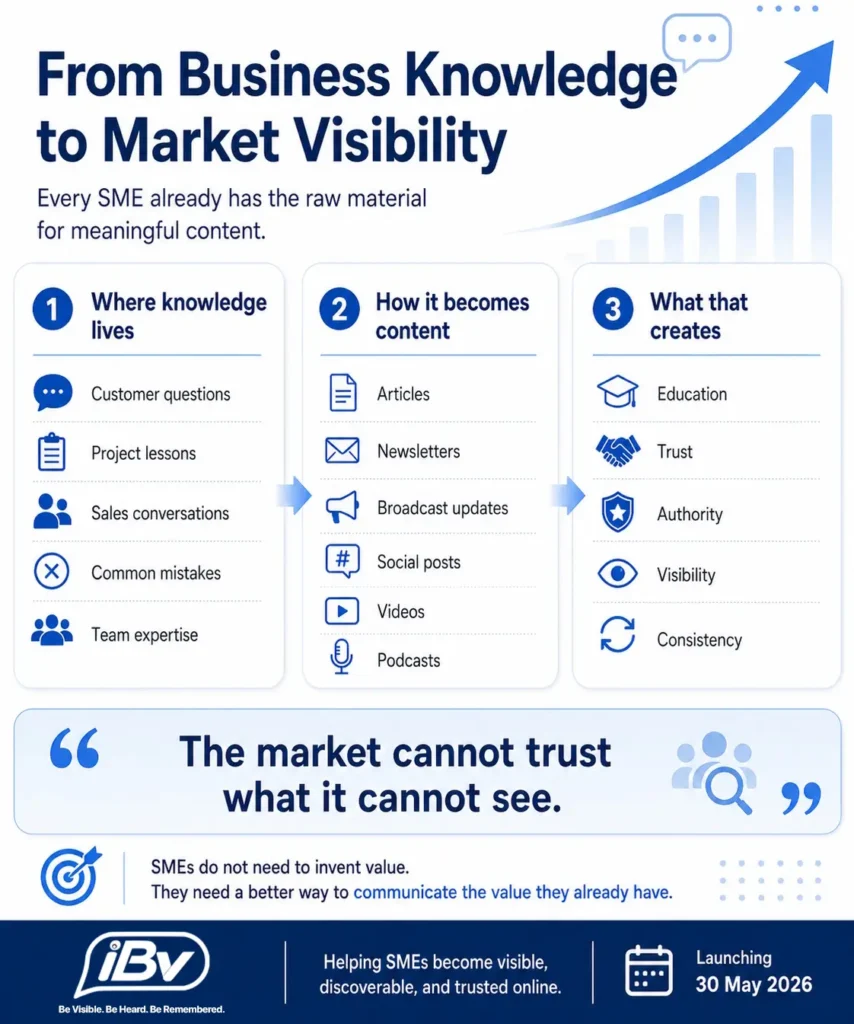
It is in the questions customers ask. It is in the lessons learned from projects. It is in the way the team solves problems. It is in the advice given during sales conversations. It is in the common mistakes customers make before they ask for help. It is in the small details that separate an experienced business from an average one.
That knowledge is valuable.
But unless it is communicated, the market may never see it.
As a small business owner myself, I understand this clearly. We spend years building experience, improving our service, supporting customers, refining how we work, and learning what really matters in our industry. Over time, we collect knowledge that is incredibly useful to customers, prospects, partners, and teams.
But most of that knowledge stays inside the business.
It stays in conversations. It stays in emails. It stays in proposals. It stays in meetings. It stays in the founder’s head. It stays in the team’s day-to-day work.
And that is one of the biggest missed opportunities for SMEs.
Because we already have the raw material for meaningful content. We just need a better way to turn that knowledge into visible communication.
Your Business Already Has the Raw Material
A lot of SMEs feel pressure to “come up with content.”
That pressure can make marketing feel harder than it needs to be. It can feel like we need to invent new ideas all the time, chase trends, sound clever, or say something completely original every week.
But in most businesses, the best content does not come from trying to invent something out of nothing.
It comes from paying attention to what is already happening.
The questions customers ask can become helpful articles. The advice we give during sales conversations can become newsletters. The objections we handle can become social posts. The lessons learned from projects can become case studies. The common mistakes customers make can become educational guides. The way we explain our process can become website content, videos, or onboarding material.
The knowledge is already there.
The challenge is capturing it.
And for many SMEs, that is where the gap begins. We are busy running the business, so the knowledge keeps moving through the day without being turned into anything the market can see.
A customer asks a great question, we answer it, and then the answer disappears. A team member solves a recurring problem, but the lesson stays internal. A founder shares a strong point of view in a meeting, but it never becomes public. A customer success story proves the value of the service, but no one has time to write it up.
The raw material exists. It just needs structure.
Not Everything Valuable Looks Like Marketing at First
One of the reasons SME knowledge stays hidden is because it does not always look like marketing.
A customer question may feel ordinary. A service explanation may feel routine. A team discussion may feel operational. A lesson from a project may feel too specific. A small detail in the way we deliver the work may feel obvious to us.
But what feels obvious inside the business may be extremely useful to someone outside it.
That is something we often forget.
When we have been doing something for years, we can underestimate how much we know. We forget that customers do not live inside our industry. They may not know what to look for, what questions to ask, what risks to avoid, or what separates a good provider from an average one.
That is where SME knowledge becomes powerful.
The everyday things we explain, repeat, fix, and improve can help customers make better decisions. They can also help the market understand why our business is credible.
So when we talk about turning business knowledge into market visibility, we are not talking about creating noise. We are talking about making useful knowledge easier to find.
That is a very different kind of marketing.
Visibility Starts With What Customers Need to Understand
Good communication starts with customer understanding.
What do customers ask before they buy? What do they misunderstand? What worries them? What mistakes do they make before they come to us? What do they need to know to feel confident? What do we explain again and again because it genuinely helps?
Those are strong starting points for content.
An article can educate someone before they enquire. A newsletter can keep customers informed about changes, opportunities, or useful advice. A broadcast message can deliver timely updates. A social post can keep the business front of mind. A video can explain a complex idea simply. A podcast can build authority and trust through deeper conversation.
None of these need to start from a blank page.
They can start from what the business already knows.
That is the shift we believe SMEs need. Instead of asking, “What should we post this week?” we can ask, “What do our customers need to understand, and what do we already know that can help them?”
That question changes everything.
It moves communication away from random marketing activity and towards useful, trust-building visibility.
The Market Cannot Trust What It Cannot See
Trust is built through experience, but before someone becomes a customer, they need signals.
They need to see evidence that we understand their problem. They need to feel that the business is active and credible. They need to understand what we do and why it matters. They need to see that there are real people, real knowledge, and real standards behind the company.
If that knowledge is hidden, trust has less to work with.
A business may be excellent, but if the market cannot see its expertise, prospects may not value it. A team may be highly experienced, but if that experience is not communicated, it may not influence the buying decision. A founder may have strong insight, but if it stays inside conversations, it will not help the wider market understand the business.
This is why visibility matters so much.
Not because attention is the goal by itself.
Because visibility gives trust something to stand on.
When we communicate what we know, we make it easier for people to understand us. When we share useful insight consistently, we make it easier for people to remember us. When we explain our value clearly, we make it easier for customers to take the next step.
The market cannot trust what it cannot see.
And SMEs should not stay hidden simply because their expertise is trapped inside the day-to-day running of the business.
One Idea Can Become Many Useful Outputs
One of the reasons communication feels overwhelming is that every channel can feel like a separate job.
The article is one job. The newsletter is another. The social post is another. The email update is another. The video idea is another. The website update is another. The campaign message is another.
That is exhausting for a small team.
But the smarter approach is to start with one useful idea and turn it into multiple outputs.
A customer question can become an article. That article can become a newsletter. Key points from the newsletter can become social posts. The same topic can become a video outline. A practical example can become a broadcast message. The insight can be added to a website page or future FAQ.
This is how SMEs can get more value from the knowledge they already have.
Not by creating more work for the sake of it.
By creating a connected workflow.
That is the opportunity we see with iBeVisible. The goal is to help SMEs turn one piece of business knowledge into structured communication that can support multiple channels, without needing to start again every time.
That matters because consistency becomes much easier when the process is connected.
From Hidden Knowledge to Helpful Content
The best SME content is often simple, practical, and useful.
It does not need to sound complicated. It does not need to be packed with jargon. It does not need to pretend to be bigger than the business.
It needs to help the customer.
A good article can explain a problem clearly. A newsletter can share timely advice. A broadcast can tell customers something important. A social post can highlight a useful insight. A video can make a complex topic easier to understand. A podcast can allow the founder or team to share deeper thinking. A publishing workflow can bring order to the whole process.
This is how business knowledge becomes market visibility.
It starts inside the business, but it does not stay there.
It becomes something customers can read, watch, hear, understand, remember, and share.
That is the real value of communication. It allows the knowledge we use every day to help more people than one conversation at a time.
And for SMEs, that can be powerful.
Because most of us already have the experience. What we need is a better way to make that experience visible.
Consistent Visibility Builds Recognition
One article is useful. One newsletter is useful. One post is useful.
But consistency is what builds recognition.
When the market sees our business communicate regularly, it starts to understand what we know and what we stand for. Customers begin to remember us. Referral partners have more reasons to mention us. Prospects have more content to learn from before they enquire. Existing customers feel more connected to the business.
That consistency changes how the business is perceived.
A company that communicates regularly feels active. It feels engaged. It feels reliable. It feels like there is momentum behind it.
A company that rarely communicates may be doing excellent work, but from the outside, that work is harder to see.
That is why we believe SMEs need more than random visibility.
Not once-in-a-while visibility. Not last-minute visibility. Not visibility that depends entirely on spare time.
Consistent, structured, professional visibility.
That is what helps the market understand the value inside the business.
Why Structure Matters
Turning knowledge into visibility needs structure.
Without structure, good ideas get lost. Drafts sit unfinished. Customer insights are forgotten. Newsletters are delayed. Social posts become random. Campaigns become reactive. Useful knowledge stays trapped inside the business.
With structure, the process becomes easier to repeat.
Ideas can be captured. Content can be shaped. Drafts can be reviewed. Assets can be prepared. Publishing can be scheduled. Distribution can happen more consistently. The business can stay visible without relying on last-minute effort every time.
That is important because SMEs do not have unlimited time.
We are already managing customers, staff, service delivery, operations, finance, growth, and all the unexpected things that happen when you run a business.
So if communication is going to happen consistently, it needs to fit into the reality of how SMEs work.
It needs to be practical. It needs to be manageable. It needs to support the business rather than add more chaos.
That is the kind of structure we are building towards with iBeVisible.
Your Knowledge Deserves to Be Seen
iBeVisible is being built to help SMEs turn business knowledge into market visibility.
The platform is designed to support the communication process across articles, newsletters, broadcast messages, social content, future video and podcast support, and publishing workflows.
But the bigger idea is simple.
Most SMEs already know more than they are communicating.
They already have lessons, insights, customer stories, service knowledge, practical advice, and valuable experience sitting inside the business.
The challenge is turning that into consistent visibility.
We are building iBeVisible to help close that gap.
Not by replacing the business voice. Not by creating generic content that could belong to anyone. Not by pushing SMEs to create more noise.
But by helping businesses like ours communicate what we already know in a clearer, more structured, and more consistent way.
That is the mission.
Why We Are Building iBeVisible
iBeVisible is being built to help SMEs turn business knowledge into market visibility.
The platform is designed to support the communication process across articles, newsletters, broadcast messages, social content, future video and podcast support, and publishing workflows.
But the bigger idea is simple.
Most SMEs already know more than they are communicating.
They already have lessons, insights, customer stories, service knowledge, practical advice, and valuable experience sitting inside the business.
The challenge is turning that into consistent visibility.
We are building iBeVisible to help close that gap.
Not by replacing the business voice. Not by creating generic content that could belong to anyone. Not by pushing SMEs to create more noise.
But by helping businesses like ours communicate what we already know in a clearer, more structured, and more consistent way.
That is the mission.
Your Knowledge Deserves to Be Seen
As business owners, we know how much goes into building something customers can trust.
We know the years of effort, the small improvements, the hard lessons, the service standards, the customer conversations, and the team knowledge that sit behind the business.
That value deserves to be seen.
Because when it stays hidden, customers may not understand it. Prospects may not enquire. Referral partners may not remember it. The market may not see the difference between an experienced business and an average one.
But when that knowledge becomes visible, everything changes.
Customers can learn from it. Prospects can trust it. Partners can share it. Teams can build on it. The business becomes easier to find, easier to understand, and easier to remember.
That is what visibility should do.
It should help the market see the value that already exists.
Turn What You Know Into Visibility
iBeVisible is launching on 30 May 2026.
As we move towards launch, our focus is clear. We want to help SMEs turn the knowledge inside their business into consistent, structured, professional visibility.
Because every SME has something worth sharing. It may not always be documented. It may not always be polished. It may not always look like marketing.
But it is there.
The challenge is turning that knowledge into communication the market can actually see.
That is what iBeVisible is being built to help with.
If you are an SME owner, founder, marketer, or operator who knows your business has more knowledge and value than your current visibility shows, we are building this for you.
Join the early bird waitlist as we launch iBeVisible on 30 May 2026, and let’s help more SMEs become visible, discoverable, and trusted online.